
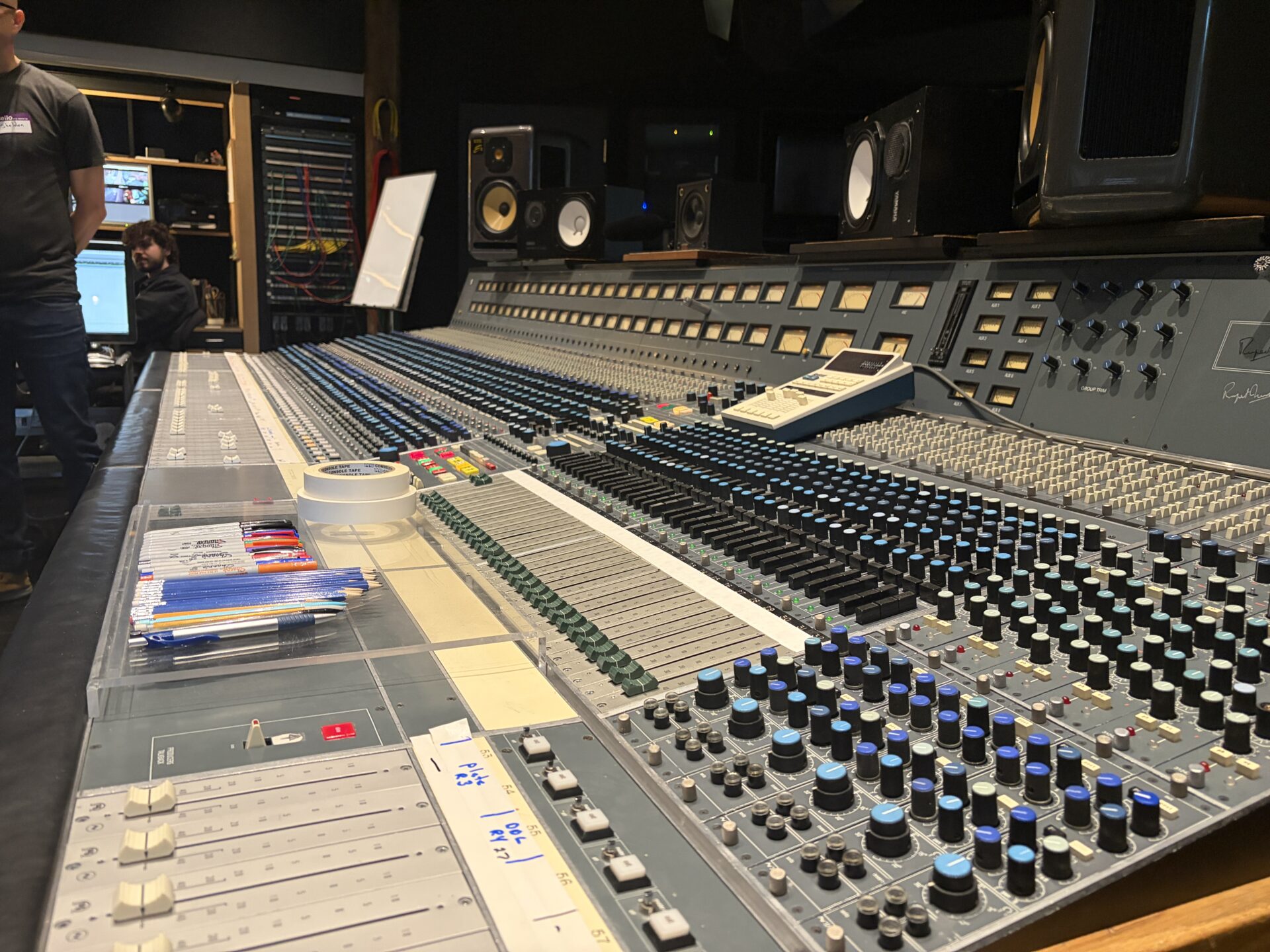
Warning: Severe high end Studio Porn ahead!
There are many studio terms used in this article, too many to explain in detail here. If a term is confusing, just google, it, and a good explanation will come up for you.
**Many thanks to Ron Obvious, the designer of the Warehouse Studio (and many others) for chiming in and correcting some of the details in my original story, and adding some details that I didn’t know. A link to his website is at the end of this article, along with some historic pictures of how the Warehouse Studio used to be laid out **
A few short blocks from Vancouver’s skid row district stands a nondescript 140+ year old building, which is Vancouver’s oldest surviving brick structure. It started as a grocery store, and at one point was the temporary Vancouver City Hall after the Great Fire of 1886. Eventually the building became run down and neglected, however musician Bryan Adams purchased the building in 1989 to prevent it from being torn down, and over the course of a few years, turned the building into a three story world class recording studio called ‘The Warehouse’. Many musicians have recorded here, including ACDC, Elton John, Metallica and Michael Buble.
Between November 13 and 15 of 2026, I attended a 3 day workshop called the ‘Henhouse Hang’. I’d seen the ad on Facebook back in 2025, but decided to hold off until this year. The ad promised a studio tour, and a detailed explanation of how a recording studio works, from setting up microphones and instruments, to capturing a multitrack recording of a couple of songs on the second day, which would then be mixed down to a final mix on the last day.
Since I am now dealing with any number of clients that own or work at a recording studio, the fact that I personally have never spent a day in a recording studio, watching how the recording process took place, I felt like a car salesman that didn’t have a driver’s license. I figured that 3 days of being in a world class studio could give me a crash course of the recording industry, so I could better communicate with musicians, engineers and producers alike. The class was limited to 18 people, so it would be an intimate education. Until this workshop, I had not been inside of the Warehouse, although I’d had an open invitation from one of their techs that had come by a couple of times to purchase reel to reel tapes.
A few days prior to the event, several emails were exchanged between our hosts, Steve Dawson and Sheldon Zaharko, both of which are award winning engineers and producers. Steve is a Vancouverite, but moved to Nashville about 15 years ago, where he owns the Henhouse Studios, and Sheldon works locally here in Vancouver. The two have known each other for many years, and have produced and mixed over 70 albums in total (See numerous related website links at the end of this article)
The email chain over the last few days allowed attendees to introduce themselves to each other, giving the rest of us some background, and to see what they were looking to get out of the workshop. As expected, it turns out that the attendees came from all walks of life, from a Grade 12 student looking to explore the recording/music industry, to musicians that wanted to expand their knowledge of the recording world, and there were several people that simply were music fans, with an interest in how a recording studio operated.
Day 1: Introductions and Microphone Techniques
Each day started at 10 AM, and ran until roughly 5 PM. While lots of information was disseminated by Steve and Sheldon, it was done in a very relaxed atmosphere, with lots of the technical details discussed in a manner that was easy for even non-technical people to follow, without completely dumbing it down.
Despite my own complete lack of experience in a recording studio, my decades of installing commercial sound systems in arenas, rec centers and pools, plus my repair work on many pro audio devices related to the recording industry paid off, as most of the terms used I was very familiar with. Even my entry level education to microphones and speakers that I learned back in 1976 in Grade 8 secondary school in the ‘sound crew’ came in handy throughout the three days.
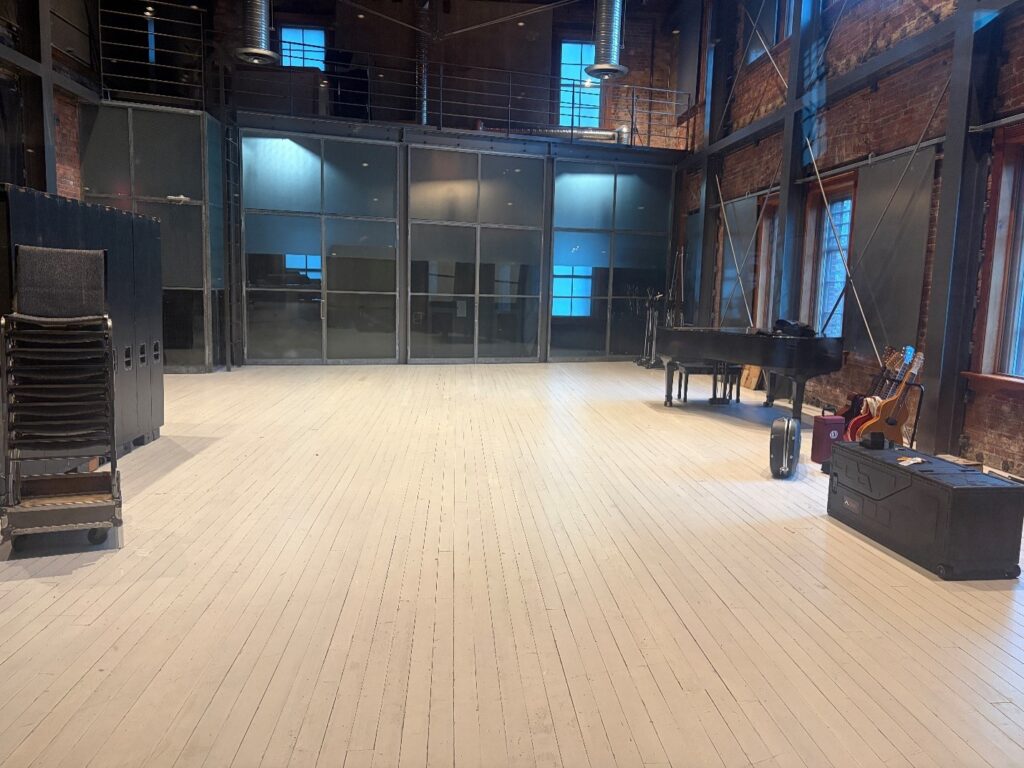
We started with a tour of the main recording area (the ‘tracking’ room). It was a large room, roughly 32 x 58’, which is massive when it comes to recording studios. Having had some brief tours of two other large local studios (Blue Wave, closed in 2016) and the Armoury Studio (still in operation), several things struck me as we toured the Warehouse:
- the room was quite ‘live’, meaning that there was a reasonable amount of reverberation due to the size of the space, and the hard surfaces of the floor and the brick walls. Other studios take great pain to deaden the recording space completely. This was not the case with the Warehouse.
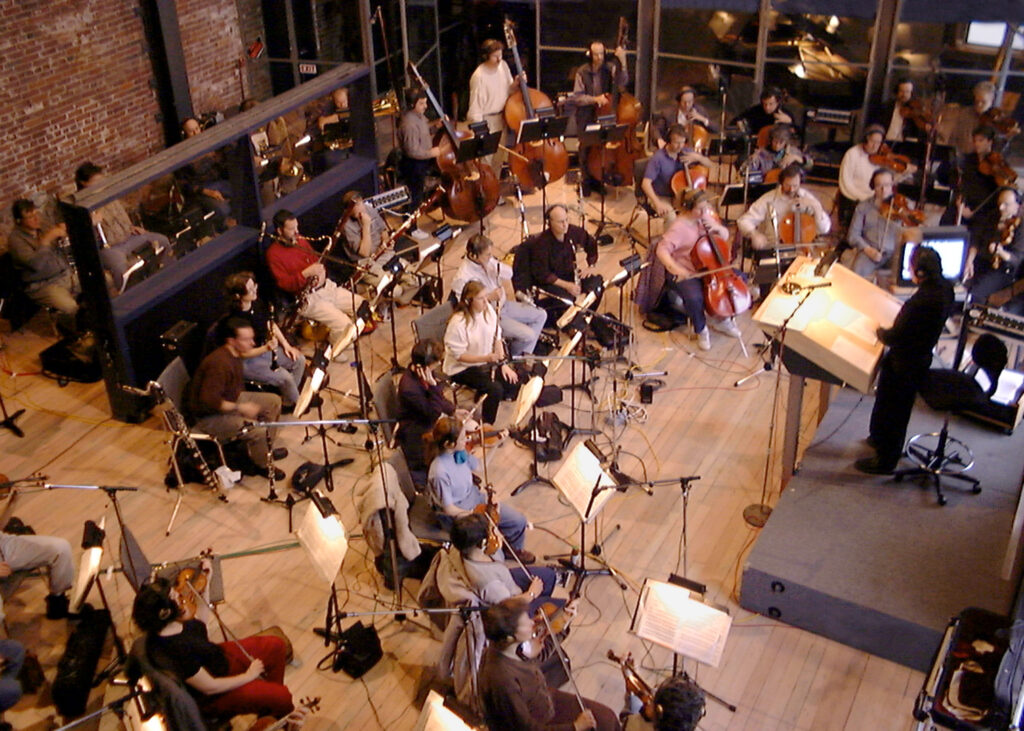
- A number of film scores have also been recorded here (pictures at the end of this article)
- the tracking room had a number of windows, and on occasion, outside noise, such as passing buses could be heard within the recording space. Again, this countered the 7 layers of drywall, and the ‘room within a room’ isolation that Blue Wave Studios was designed with.
- even the wood floor creaked on occasion as you walked across it. It’s the original floor in the tracking room, but stained and sanded, and the control room floor was renewed in 1994.
At one end of the tracking room were three isolation rooms that could be used for drums, vocals, or to isolate any number of other instruments, or sources of sound. We ended up using all three of the rooms when we were recording on day 2.
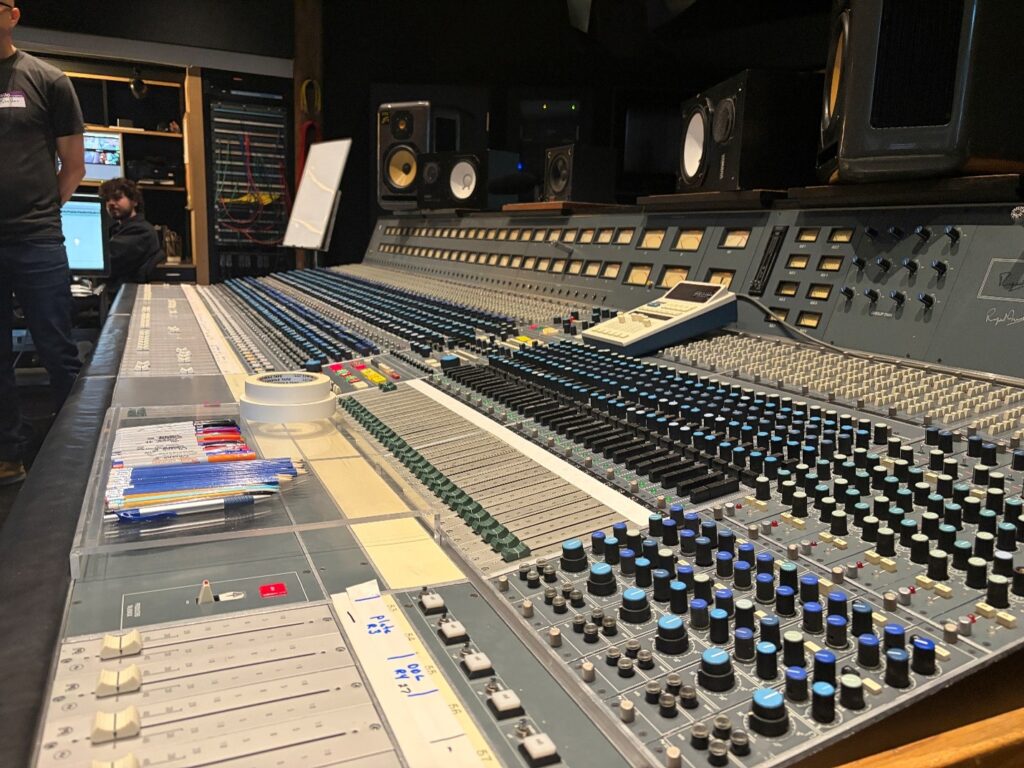
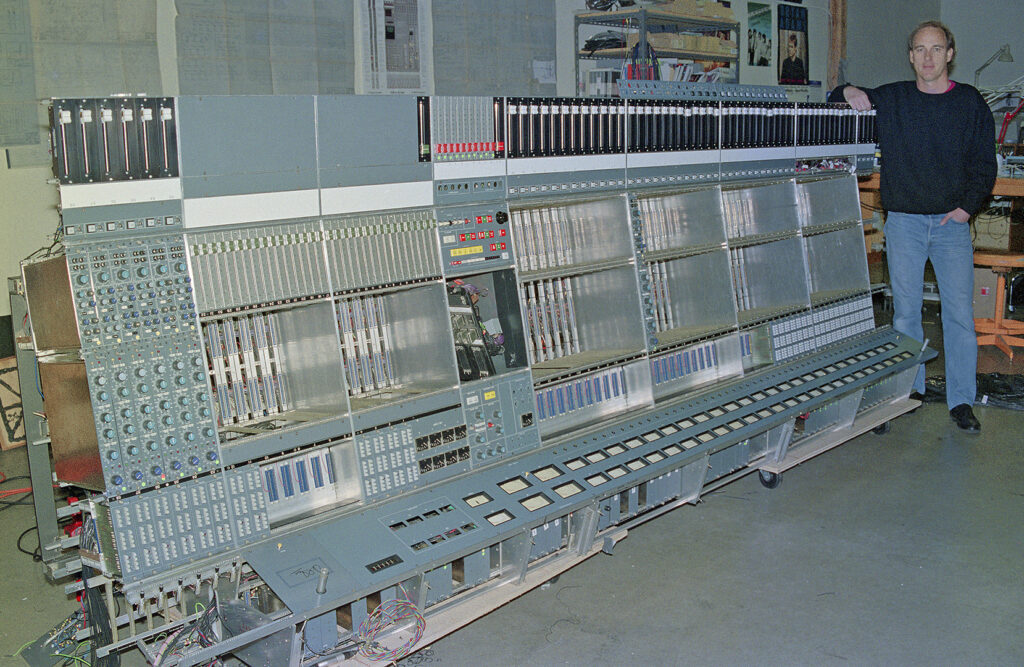
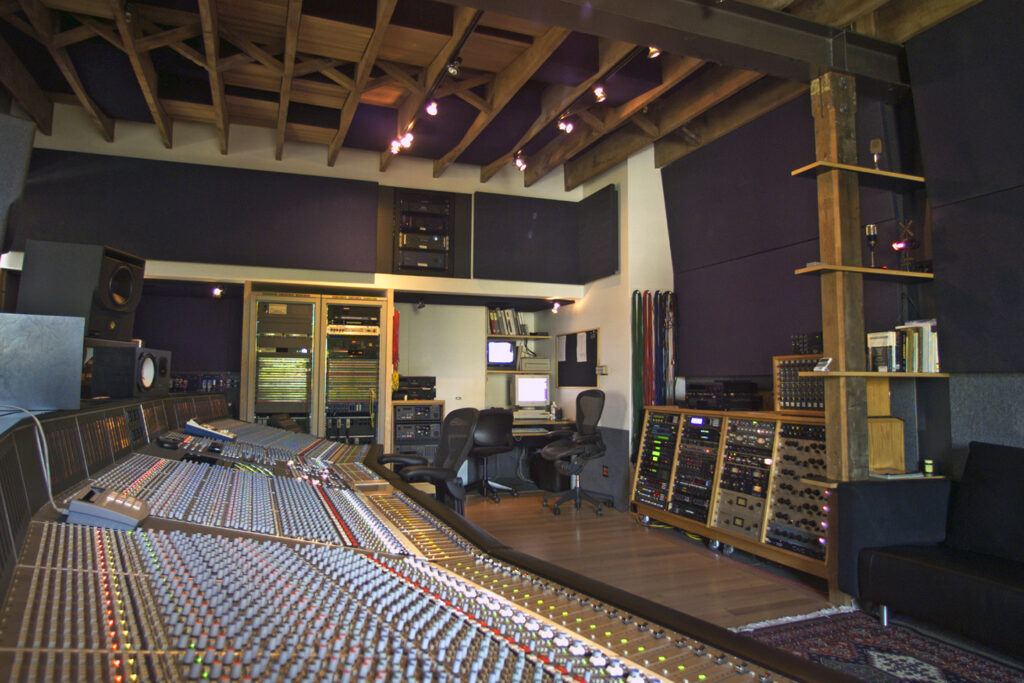
One of the famous pieces of equipment at the Warehouse is their 1978 Neve recording console with 52 inputs. This is a Neve A6630 mixing console, one of only three in the world. The one at the Warehouse was originally installed at Air Studios in the UK, owned by George Martin, of Beatles fame. The sister consoles were installed at Monserrat Island, with 40 inputs, now located in Toronto, and the third, a 32 input console is at Air Studios, owned by George Martin of Beatles fame. Years later, George asked Rupert Neve, who was starting the Focusrite company, to add 32 channels to the Air Studios console, so it now has a total of 64 inputs.
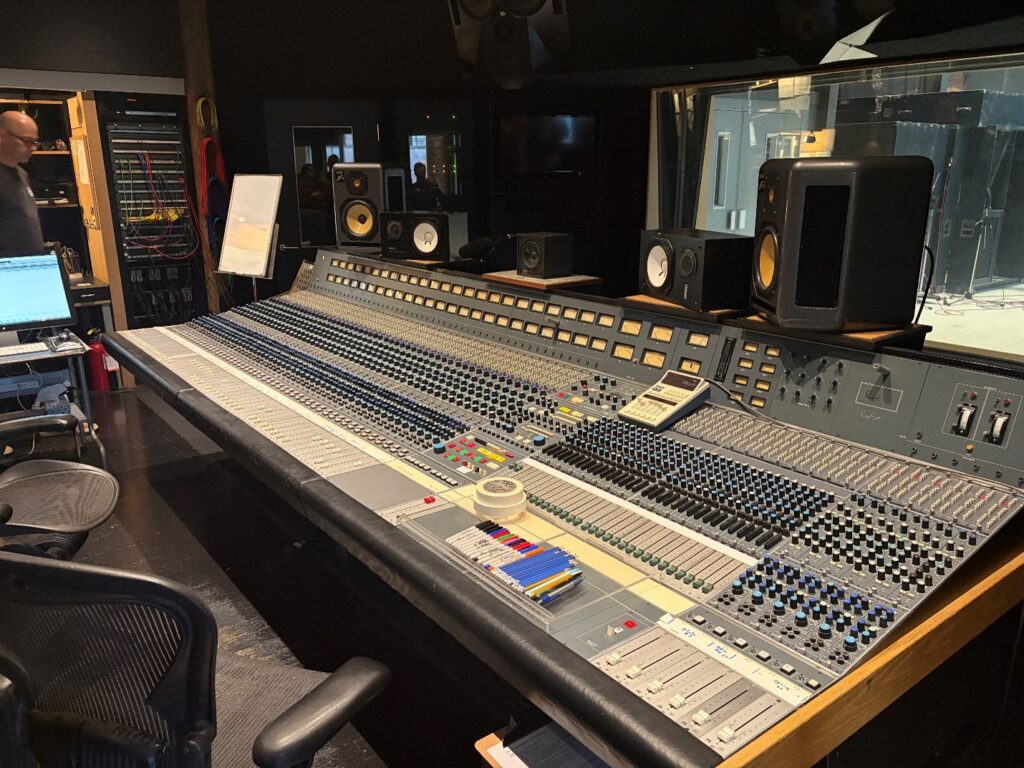
This mixing console is completely analog. There’s no computer automation, no ‘flying faders’, etc. There are a total of 52 inputs, (as told to us by Steve) plus another 24 inputs that originally came from an analog tape deck (and I believe it’s still wired that way), but the main recording device at this point is a state of the art ProTools Classic system, with the latest software from 2025.
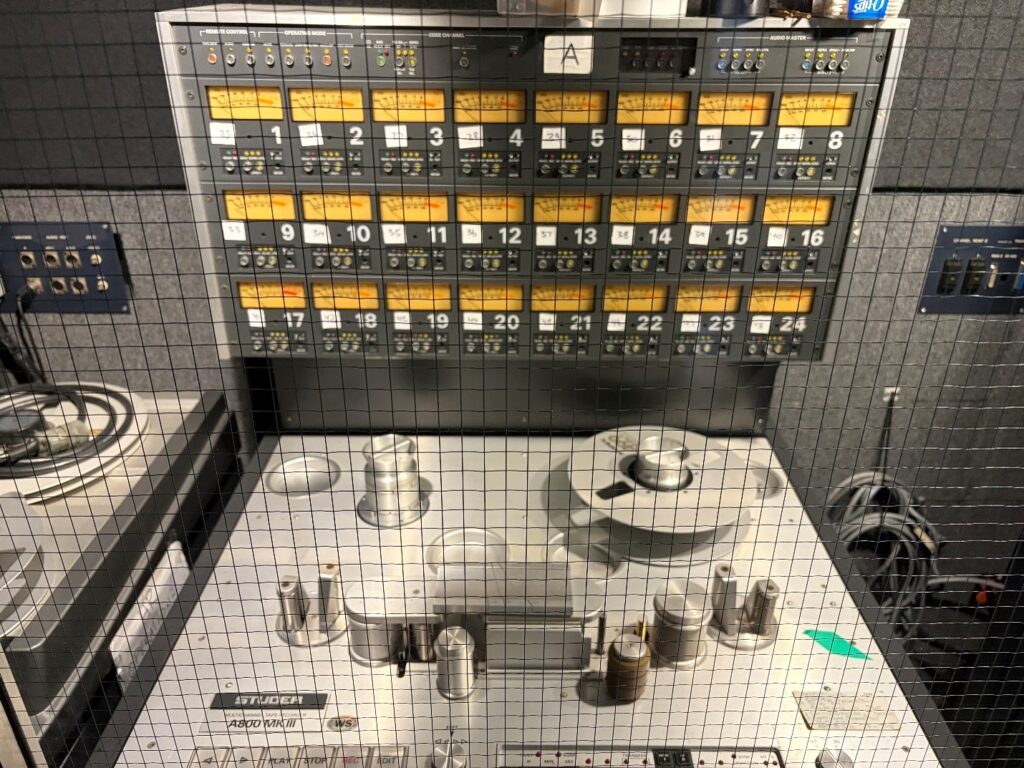
There is a machine room off to one side of the control room, that houses a Studer A800 24 track tape deck. There is also the latest Sony digital DASH 3348HR $250K 48kHz 24Bit tape deck which was a popular format in the early 1980s, and remained popular for around 18 years. With the advent of digital audio workstations like ProTools, the DASH format quickly became obsolete. Their special digital tapes haven’t been manufactured in decades, and in speaking with Colton, the tech at the Warehouse, he said it’s been a good 25 years since it’s been turned on.
Steve also mentioned that the Studer machine is rarely used, if ever, and that he and Sheldon did not record to tape at this point. The Warehouse originally had four of these, two in Studio 2, and one each in Studios 1 and 3.
We did have a bit of a funny moment the morning of day 2, when one of the guests asked how long Steve and Sheldon kept the files/recordings of the client. Steve mentioned that ultimately the storing of the recordings were the responsibility of the client, and that recently a client asked for a recording that he had done 10 years ago. Steve said that he did find the hard drive that the recording was stored on, but then had to buy an adapter from Amazon to attempt to retrieve it, as the old hard drive used a Firewire connection, that hasn’t been the industry standard in years. At that point Steve paused, looked at me, and said ‘well, I guess there are some advantages to tape’.
Steve ran down the basics of the Neve console, how microphones, the Protools setup and the outboard effects were connected to the system, along with the main monitor speakers, and the smaller speakers, and why several sets of speakers were needed to ensure that the final result was a good sounding mix, that would sound great on a high end stereo, or Bluetooth headphones. Everything was explained clearly, in easy to understand terms.
Studio 2 was originally set up as a 5.1 surround sound setup, however it’s since been converted to a stereo setup only, and the rear surround speakers were taken down. The custom built large monitor speakers, designed by studio legend Ron Obvious (who designed the entire Warehouse Studio as well) are still in place, and use three identical Left-Centre-Right speakers, although currently only the left and right speakers are used in a standard stereo configuration. Many 5.1 surround sound film scores were done in this room
Studio 3 had an SSL 9080J mixing console, where many 5.1 surround sound recordings were done, including a large number of live DVD videos.
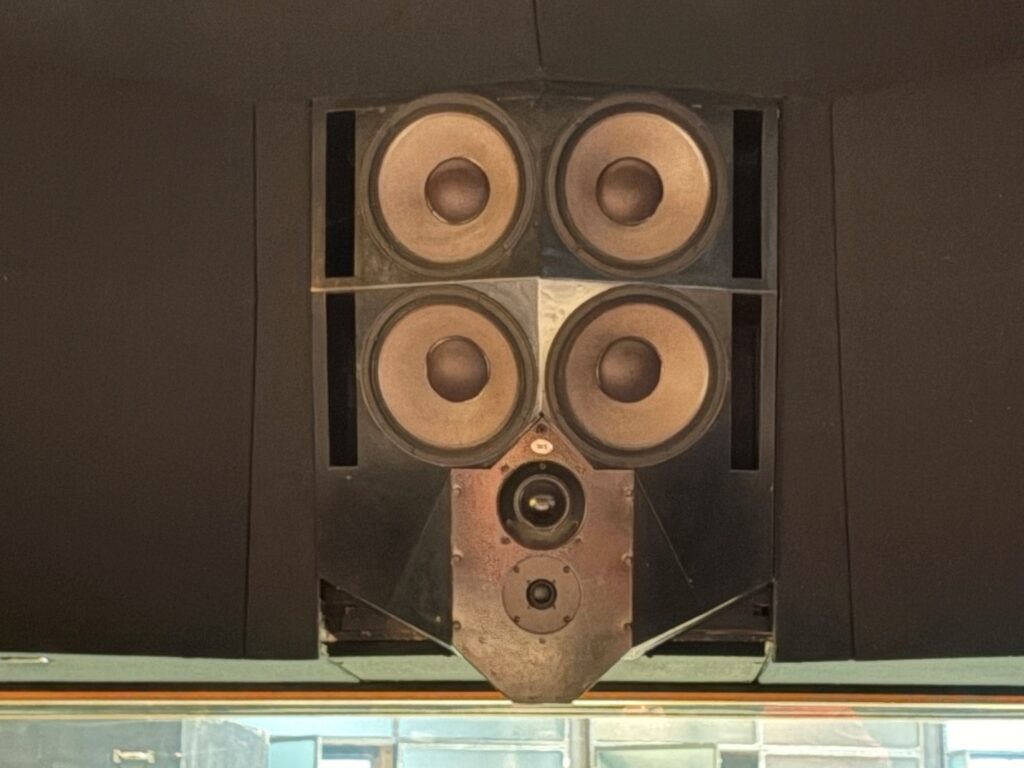
There are two other studios at the Warehouse. One of them is on the ground floor, used mainly as a mixing studio, to mix down tracks. It is set up as a full Dolby Atmos system, with an SSL 4072G with 242 EQ modules mixing console, also designed in the UK, just as the Neve console is. We only spent a few minutes in this studio, to tour it, and we spent no time using this studio during our workshop.
A Studer A820 2 track ½” machine was used until the advent of the DAT machines.
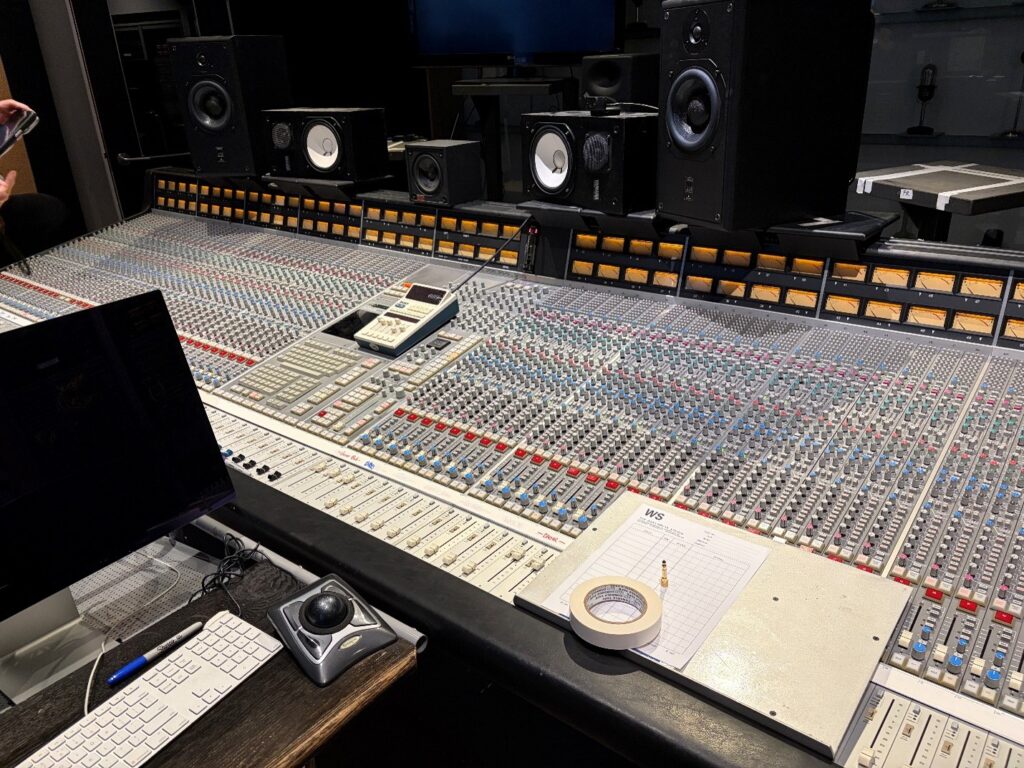
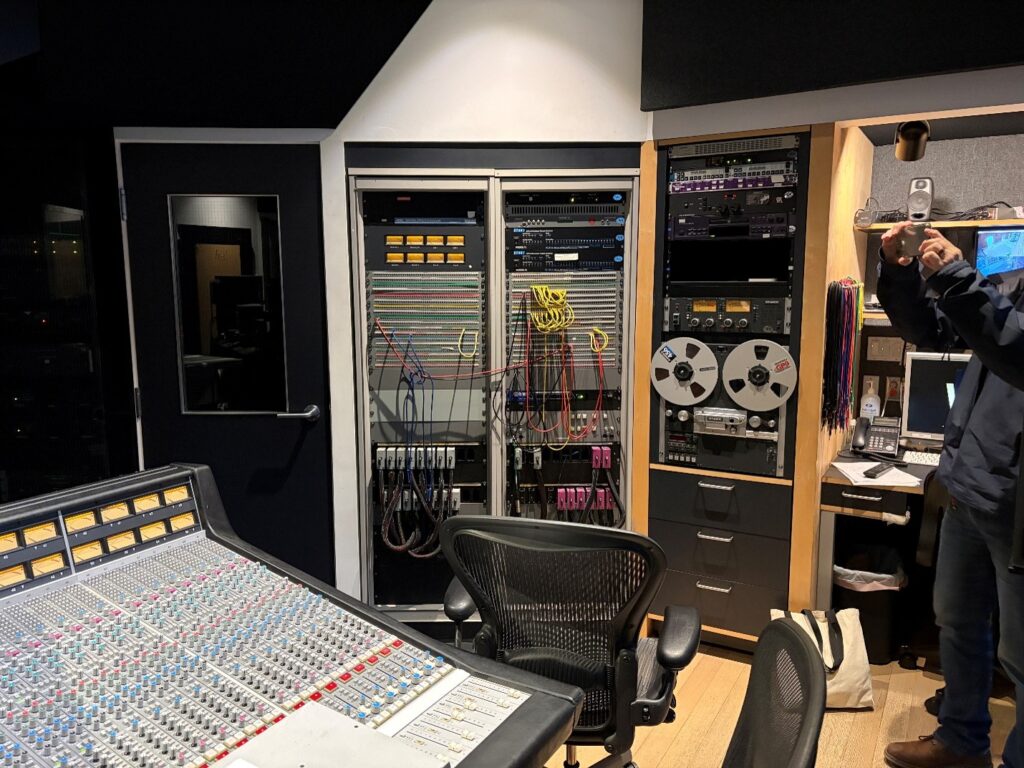
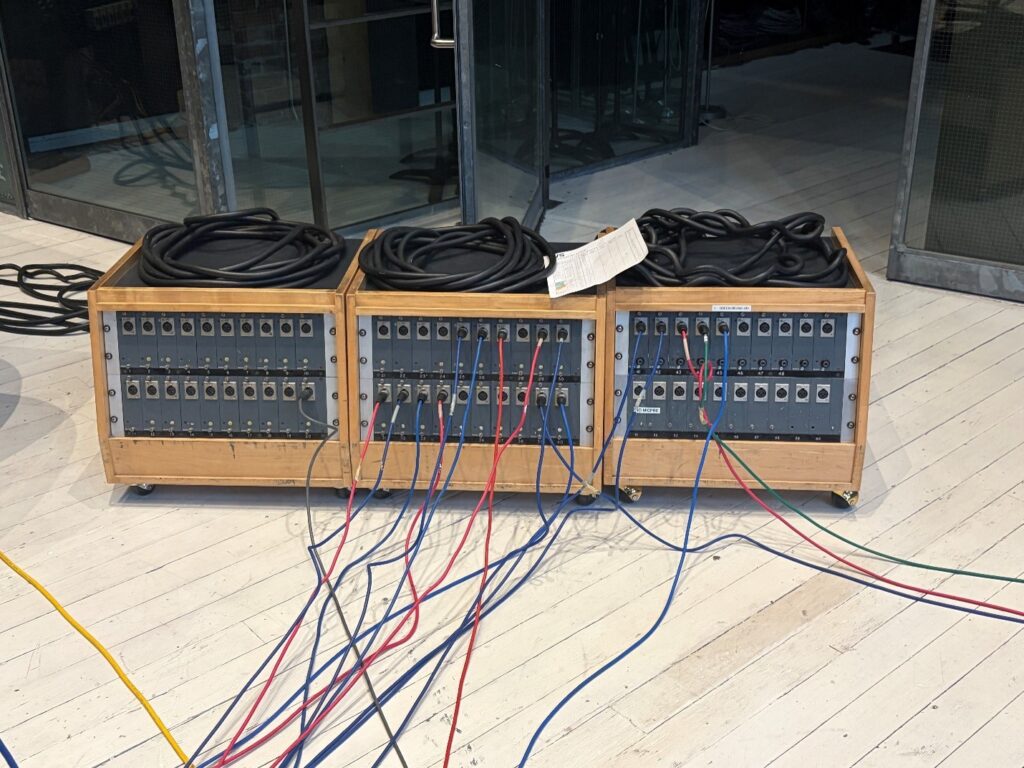
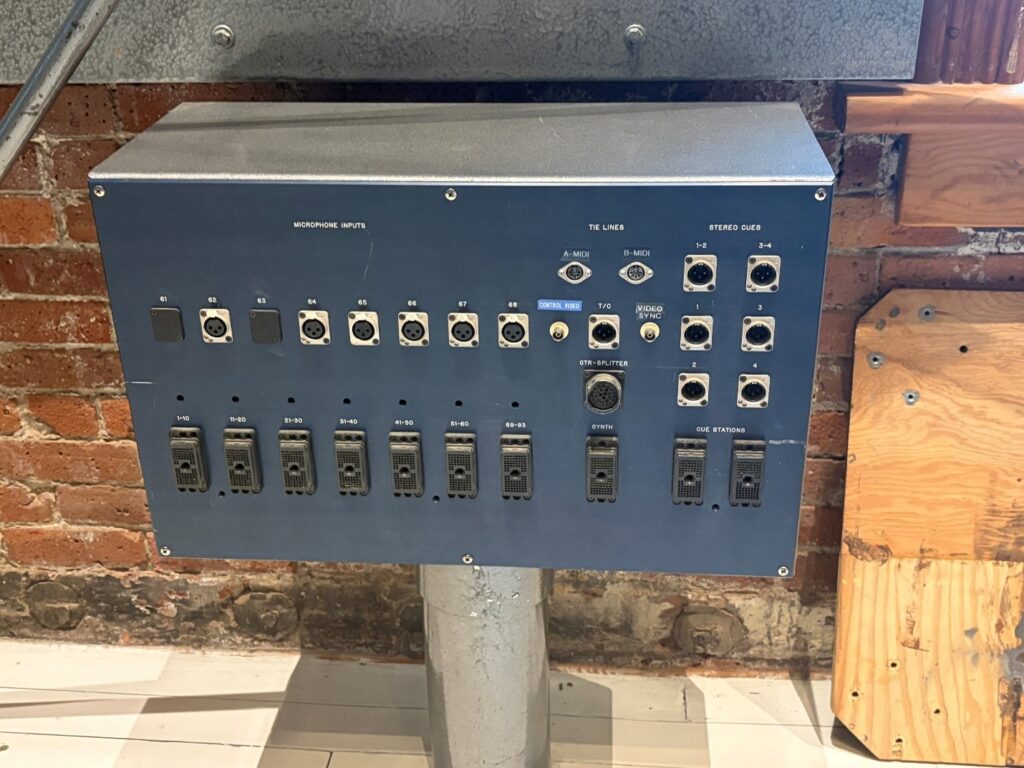
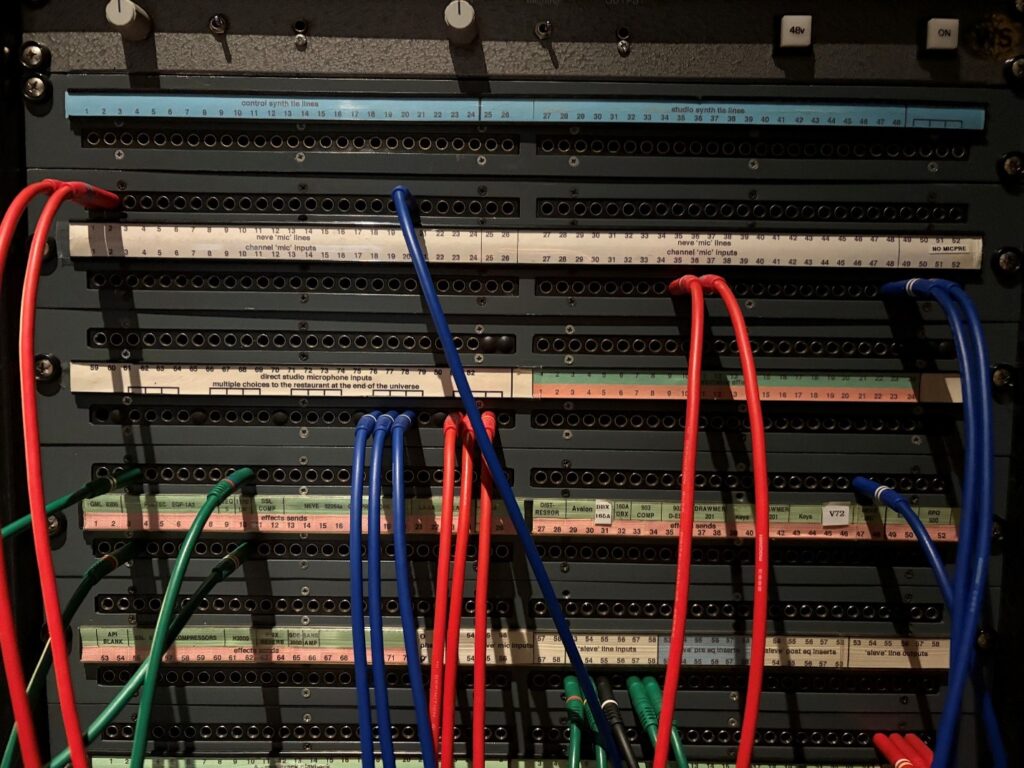
A unique feature of the Neve 6630 mixing console, is that all of the microphone preamplifiers are located within the tracking space, rather than within the mixing console itself. This was the very first remote microphone preamp console system, to keep distances as short as possible between the microphones and the microphone preamplifiers. This was cutting edge back when the consoles were made, as it would increase the low level microphone signals to much higher ones right at the mic jacks, allowing for longer cable runs between the mic inputs and the mixing console, with far less chance of the cabling in-between picking up hum or other unwanted noise.
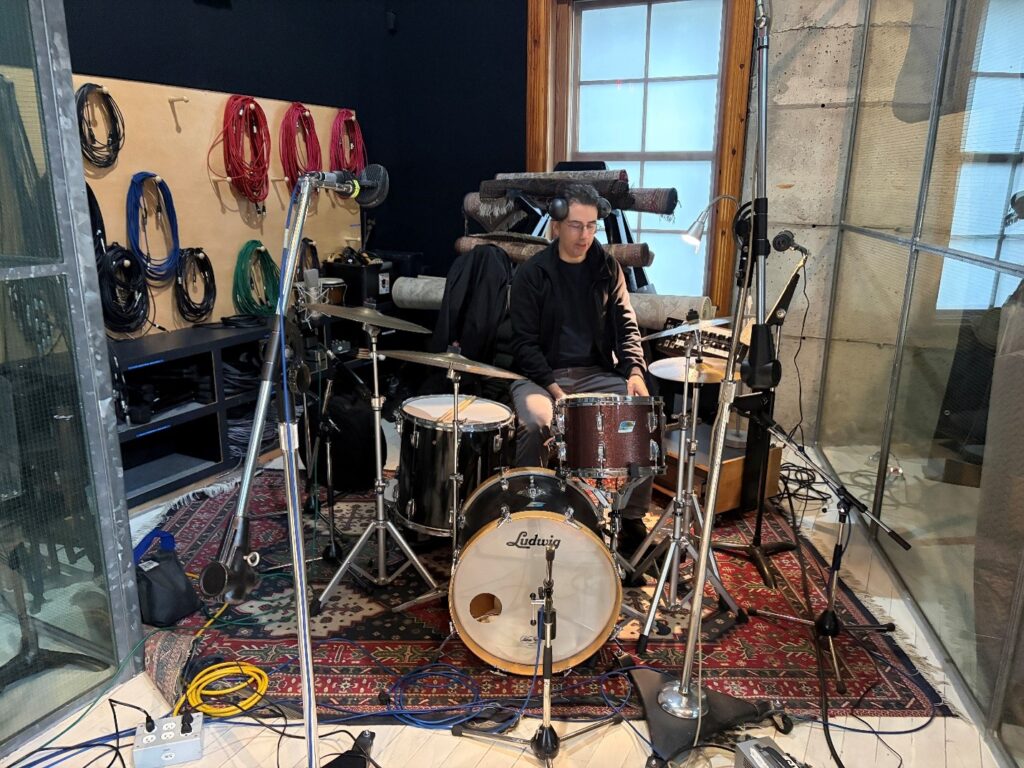
After lunch, Nino, the session drummer came in to set up his drums, and Steve and Sheldon spent a significant amount of time educating us about microphones, the different types (dynamic, condenser and ribbon), and the pros and cons of using each one, and why you would (or wouldn’t) in a typical studio recording setup. While I already knew a bunch of the basics of the information given here, the demonstrations were invaluable to many of us, as Steve showed up things like pickup patterns, and how different microphone placements around the drums and entire drum set would vary the sound put onto a recording track. Several methods of mic placement and theory were covered, including the Glyn Johns method, something that I had vaguely heard about, but seeing it being practiced brought things to another level.
The attendees could freely move between the mixing room and the tracking room, to listen to what was being picked up by the mics, or to hear the live drums as they were being recorded.
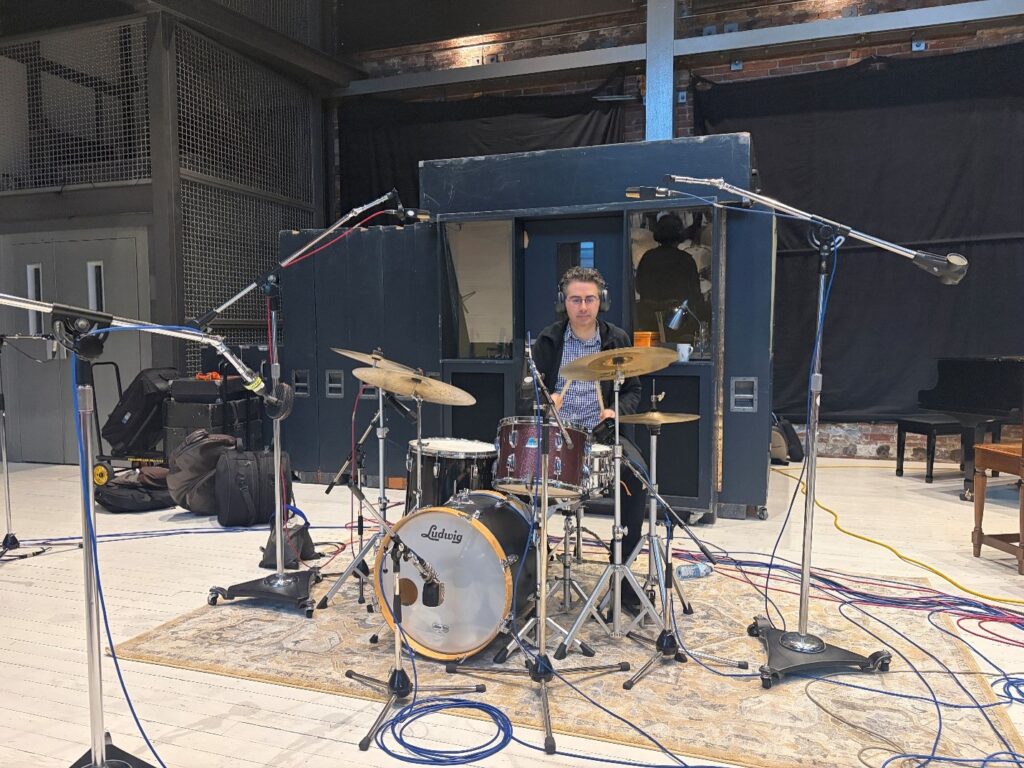
Everyone, including Nino was completely open to questions and offered his opinion on occasion as required, regarding his recording experiences.
The isolation room behind Nino in the above picture, housed a Leslie speaker cabinet, for a Hammond organ, that Chris brought in.
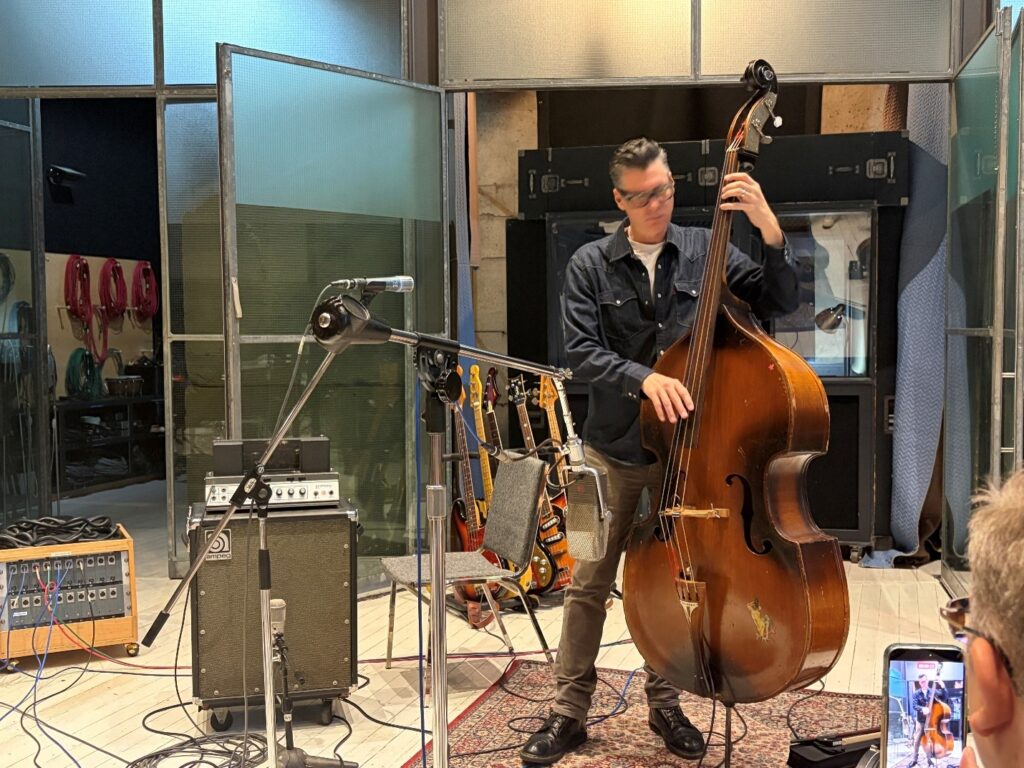
Micing the drums took us to about 3 PM on the first day. Jeremy the bass player also came in, with both electric and acoustic basses, and he was very thorough in describing why he selected the various instruments and the bass amp that he brought with him for the session.
Steve covered various micing techniques of the acoustic stand-up bass, and why they chose the microphone that they did, and demonstrated live how microphone placement would affect how the instrument was recorded. Eye opening indeed! Jeremy took any number of questions by the musicians in the group, who asked about details of his equipment.
Steve also showed us some tricks with regards to microphone placement, and using the equalizers on the mixing board, as well as some outboard ones, to remove some unwanted noises from the mix. That did show that a studio didn’t need to be completely isolated from the outside world as I had always expected it to be.
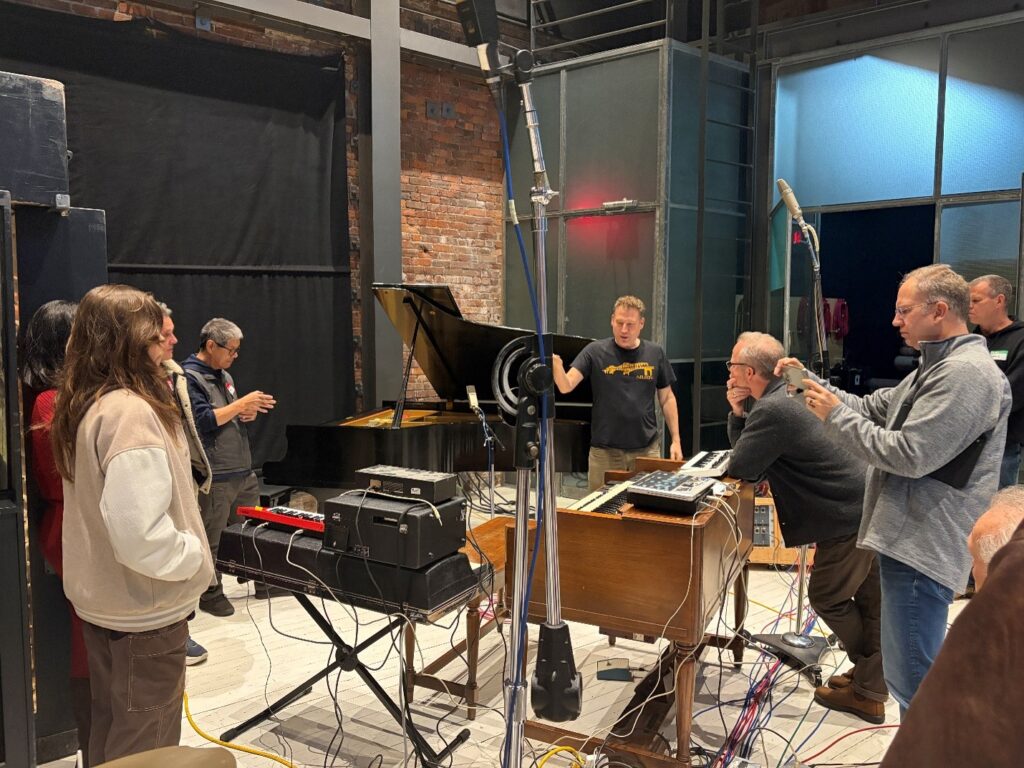
Finally, Chris Gestrin was there, setting up his keyboards, ranging from a Hammon Organ, to a grand piano (property of the Warehouse), two small synthesizers, and a Wurlitzer piano (similar to a Fender Rhodes, but with its own unique sound). I’ve known Chris for at least a couple of years, and have repaired a couple of tape decks for him.
Day 2
It turned out that the two songs to be recorded were both blues based songs, a cover of an Etta James song, ‘Damn Your Eyes’ from 1988, and the other a cover of Bobby Charles’ ‘Long Face’ from 1972. I knew neither song, and to my surprise, (and everyone else’s), Steve told us that he hadn’t told the musicians about what the arrangements of the songs were going to be. He didn’t even tell them the names of the songs that were going to be recorded, as he didn’t want them to have any preconceived notions about how the songs should turn out. Instead, Steve spent some time explaining how he used the Nashville Number System to easily score charts that the musicians could read, and then play along with, improvising as they went through the song.
As a hack piano player, this was mind boggling to me. Granted, it’s been 40+ years since I played the piano regularly, but surely the band would need to know how the song went before going into an expensive recording studio, to lay down some tracks? It turns out that no, a professional musician can read those charts, and play along, and then improvise along with what they wanted to play.
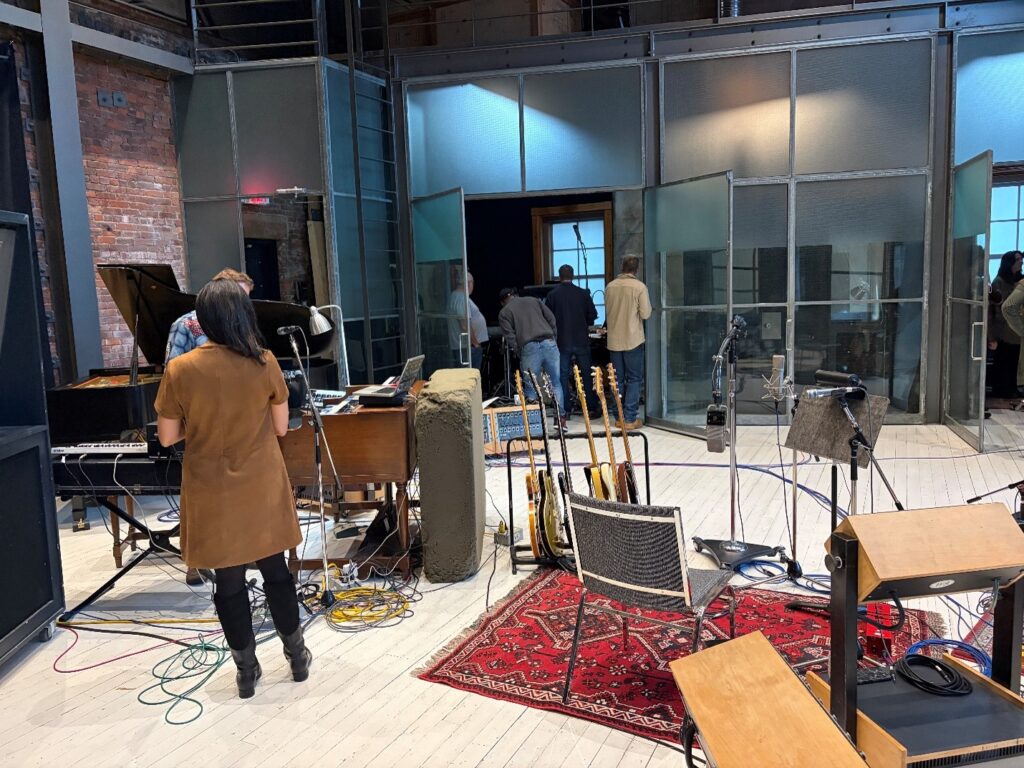
When we arrived at the studio on the morning of Day 2, the studio had been rearranged significantly, to set the musicians up the way Steve wanted. The singer was in one isolation booth, the drums in another, and the electric guitar amplifier was in a third one. This minimized instrument bleed-through between microphones, and as Steve pointed out, some bleed-through can be beneficial in some cases, but not so much in others.
The artist was named Krystle Dos Santos, and she was someone that you could immediately tell was a stellar singer, as she sang a few lines in the studio, with no microphones in front of her. A few of us turned to each other, saying and thinking ‘man, this woman can SING!’. Granted, that’s to be expected in a world class studio, but seeing and hearing it happen in person is completely different than watching it on TV.
Steve played the guitar parts, on electric and acoustic guitars, and again, he walked us through his guitar selection, and explained why he brought them, along with the few effects pedals that were plugged into the system as well.
The band literally synced up in fine form after one run-through of the first song, and Steve announced that it was time to do a take. Wait, what? No countless hours of setup? No multiple run-throughs of the songs that were to be recorded?
Whatever happened to the lead singer’s ego, that came into the room 30 seconds before they did, the bass player that showed up 4 hours late, due to partying the night before, and the guitarist that insisted his amp be on 11, to get that ‘tone’? Record, in, out, and done in a VERY short period of time, with no rehearsals? Sure enough, that’s exactly what happened.
Over half the vocalists now just sing in the control room. This keeps the overall volume down, and solves the ‘talkback’ issue, a small PA system used so that the recording engineer can talk to the musicians in the tracking room. With the musicians in the control room, no PA system is needed.
Bryan Adams does his singing in the control room. Guitar and bass players all play in the control room. Just their amps are out in the tracking room.
Steve explained to us that he didn’t believe in multiple takes of songs, nor a ‘scratch’ (guide) vocal track, to assist the singer from a basic recording. Krystle nailed the take the first time, with a couple of overdubs where she wasn’t happy with what she sang. With a digital program like ProTools, redos are quick and almost instantaneous, with no rewinding of tape, no cuing of tracks. Click, click on the computer mouse, and the redo of a certain part of the song (or even just a single word) is edited, and cleaned up.
Sheldon remained in the control room for the most part, and did some tweaking of the various mics, and even changed out the acoustic bass microphone, as they weren’t quite happy with the sound of the bass on the first run-through. Changes were done quickly.
We participants had the opportunity to sit in chairs out on the tracking floor, and headphones were provided so we could hear the mix done by Sheldon. We could sit in the control room instead, hearing what Sheldon was doing, and most of us moved between the two areas as we saw fit.
Short of a few overdubs of some additional instruments, the basic recording was done within an hour or so. Steve told us that this was a typical speed at this point with professional musicians, and with the cost of a high end studio being significant. Unless you’re a world class band, selling millions of albums, booking days or weeks of studio time was now a thing of the past.
Once the basic multitrack recording was listened to a couple of times, it was onto the next track. The second track was a more up-tempo blues type of song, and Steve told us that we’d each have the ability to do a mixdown of the multitrack version, to a final stereo mix, and we’d do it in groups of 4 people. The catch? We’d have a total of 10 minutes to do it. This was a challenge! This was going to happen on the third day, and then Steve and Sheldon would critique and judge us, based on the mixes we came up with. He challenged us to remove some instruments, or bring them up or down in the mix, as we saw fit.
The second song had significantly more overdubs and keyboard parts, from Chris using the Wurlitzer, piano, and synth, to Jeremy adding mandolin parts. Krystle did some harmony overdubs, which sounded fantastic. Being a part of the mixing/overdubbing process, and seeing a song get layered to the final version was fascinating. Steve and Sheldon referred to numerous other producers and engineers, from Bob Rock to Bruce Swedien, and they told us that with the case of Michael Jackson’s ‘Billie Jean’, the song was mixed 91 times, with the final choice for the album being mix number 2. Go figure.
Day 3
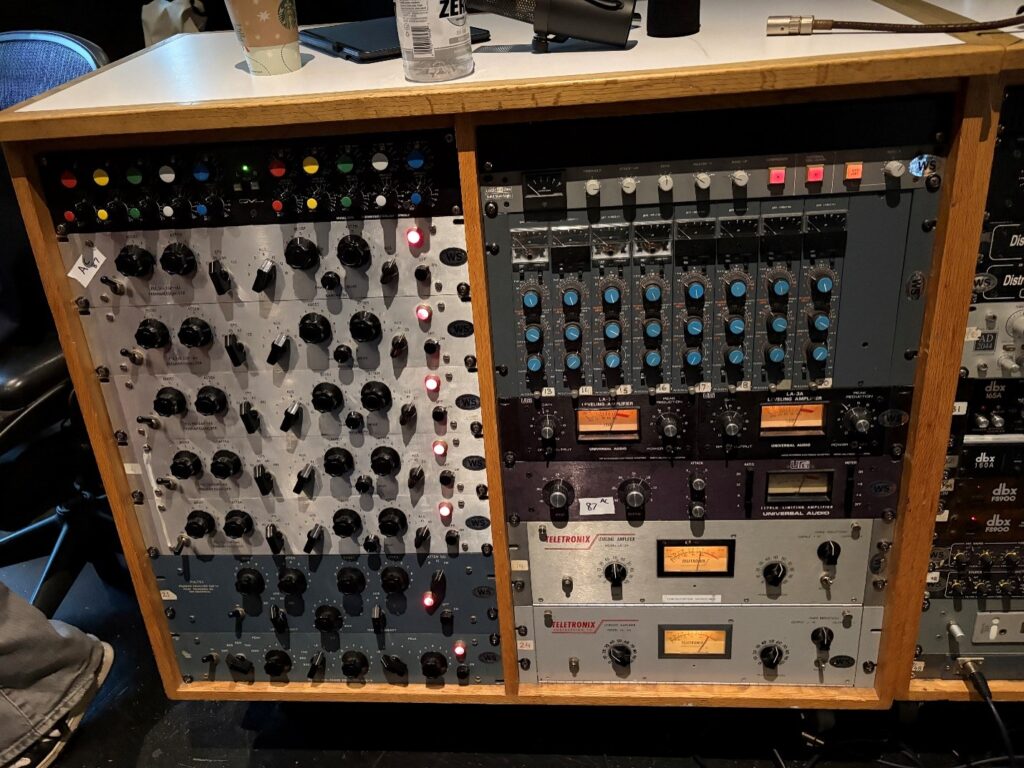
Day three started with some more discussions of the mixing process, as today both songs were going from the multitrack format that they were currently in, to the finished 2 track mix. Steve and Sheldon did some more minor tweaking of levels and added some compression and equalization, explaining why each step was required, and why a bunch of these effects were being used. He also told us that many of these devices now exist as plug-ins within the ProTools program, but he preferred to use the external analog units for the most part. He did bring in some plug-ins within ProTools, and showed us how they worked.
Steve and Sheldon spent about an hour dialing in the mix for each song, bringing us to about 3 PM. They then reset all of the mixer controls to the null position, so that we would start from scratch, not stealing their version of the mix.
The vast majority of modern day mixing and recording is now done ‘in the box’ (recording into a recording program (ProTools, etc) in a computer.) Speed, flexibility, low cost, and high quality all contribute to many large recording studios having shut down in the last 20 or so years.
Then it was our turn. We randomly selected our groups by drawing numbers from a hat. I was in group B, with two women that were young, and having a keen interest in the music/recording world, and another fellow that had a home studio, who knew a fair bit about the recording process already. As the first group was in the studio, the other three groups discussed strategy, and what we wanted to do. I personally suggested changing the snare drum sound, and the others agreed.
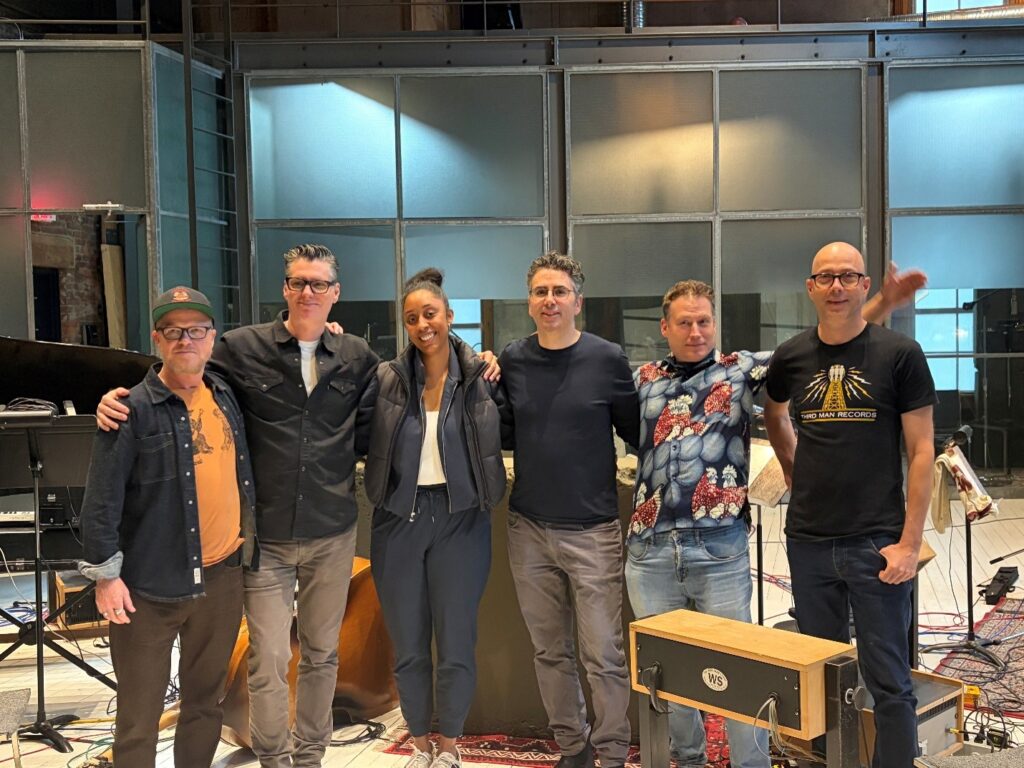
We pulled chairs up to the mixing console, and spent about 4 minutes dialing in the snare drum sound. The others as well as myself were becoming acquainted with the mixing console controls, with Sheldon assisting, and then we were down to 2 minutes to try and get a mix together. All too soon, the 10 minutes was up, and we recorded the multitrack recording down to 2 tracks. About 1/3 of the way through, I realized that the lead vocals were far too low, although it was too late to do anything at that point. Let the chips fall where they may.
Once the final two teams completed their 10 minutes each, we all went back into the control room. Steve played back each of the four mixes, without telling us which one belonged to each team. I thought (but wasn’t quite sure) that our mix was the first one to be played. The main vocal track was definitely too low, regardless of whose mix it was (my opinion only). Steve and Sheldon took notes for each playback of the song. Once they were all played, they asked all of us if we could identify which mix each team’s was. Most people agreed that they could.
When it came to the comments, it was critiqued that the first mix (which was indeed ours) had no stereo separation, and the entire track sounded mono. Sure enough, in our haste to try and improve the snare drum sound, we completely forgot about the pan pots on the mixer, which would locate each instrument from the far left to the far right. Since Sheldon reset the pan pots to the mid position, indeed, we ended up with a (not so) glorious mono mix. (“but… but… we did that on purpose, to give credence to mono AM radio, and hifi systems of yesteryear!”). No, we didn’t. We simply forgot.
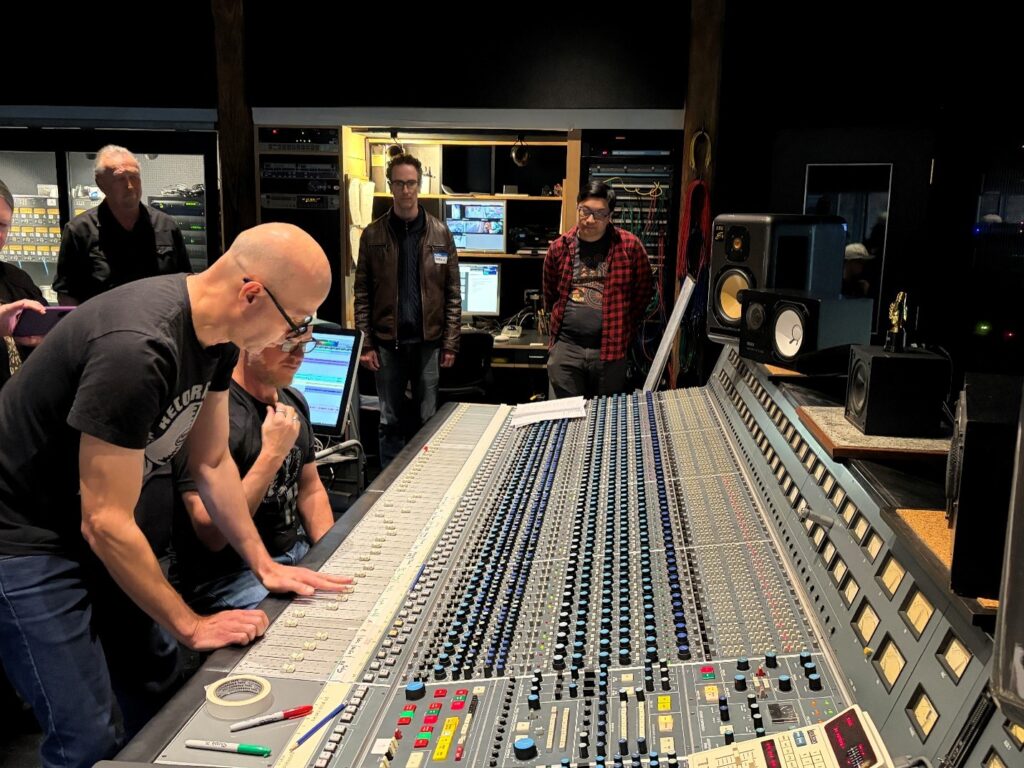
Pros and cons were discussed for each mix, with the third mix (Team A?) being crowned the winner. Kudos were given to the fourth mix, which pushed the mandolin part to the forefront. Funny enough, while we were playing with the mix, I thought for a split second to emphasize the mandolin as well, but then thought that our mix would be too different from the rest.
All in all, Steve and Sheldon, and the musicians all made things look far too easy, when in reality, even with the varying backgrounds of all participants in all fields of music and related fields had tons to learn, and needed 1000s of hours of experience behind a mixing board.
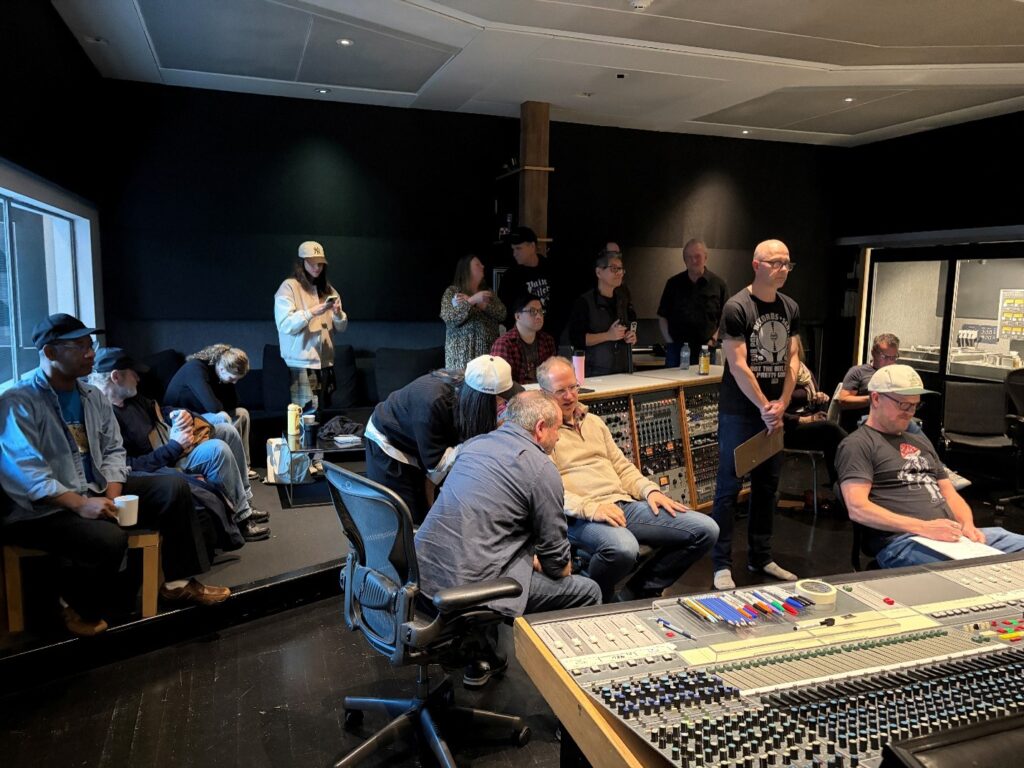
The last half hour or so was spent discussing more questions about the session, and about the music industry in general. All in all, I got exactly what I wanted to learn from this workshop, and so much more. To me, the price of admission was gotten back with invaluable information by the end of the first day, never mind the two days that followed.
Here are two short clips of the second song we recorded, ‘Long Face’. The first clip is taken in the control/mixing room, and you’re hearing the mix from the monitor speakers. The second is taken in the tracking room, and you can hear how there’s a lot of isolation between the instruments, so you’re only hearing the sound that is in the room. Both clips are posted with permission from Krystle Dos Santos, with thanks.
Thanks to Ron Obvious, designer of the Warehouse studio, he was kind enough to send me some old pictures from the Warehouse.
If anyone is interested in music, music production, is a musician, or simply want to know what goes on inside a top of the line recording studio, this workshop is highly recommended. Pertinent links for more information are below.
Website Links:
Musicians:
Krystle Dos Santos- Vocals: https://www.krystledossantos.com/
Steve Dawson- guitarist, producer: https://www.stevedawson.ca/
Chris Gestrin- keyboards: https://chrisgestrin.com/
Nino DePasquale- drummer: https://avamusic.com/pages/nino-dipasquale?srsltid=AYCX9vLAHcX5JFlsNjbKFxlqZYn6MnMq5S3nuNGUpa04ajapwO7t6vs5
Jeremy Holmes- bass, mandolin- https://www.terminalstationband.com/about
Sheldon Zaharko- engineer, producer- https://www.sheldonzaharko.com/
Studio(s)
The Warehouse: https://www.warehousestudio.com/
John Vrtacic information: https://globalnews.ca/video/9566202/the-legend-of-john-vrtacic
Ron Obvious- Warehouse Studio designer: https://www.dragonflymobilerecording.com/
1986 – designed Bryan Adams’ studio in West Vancouver, for ‘Into the Fire’. Worked at Little Mountain Sound until 1991. Designed and was technical direction of The Warehouse Studio from 1991-203. Built the MU-1, (Mobile Unit #1) to record two albums in Jamaica and Saint Tropez, with Mutt Lange and Bob Rock.
Little Mountain Sound documentary: https://www.youtube.com/watch?v=MlnsoSmSmPQ